Political Life and Public Duty in the Nation’s Earliest Decades
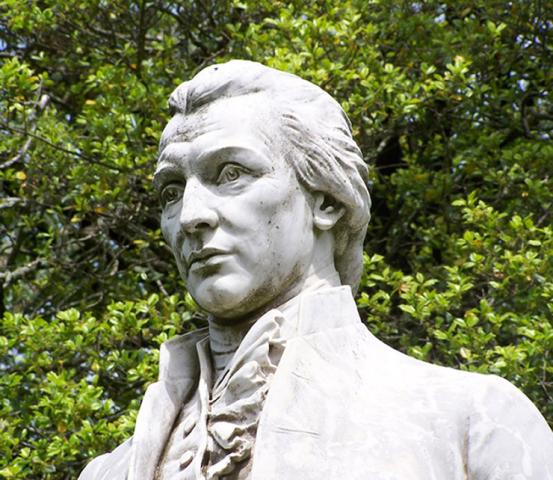
James Monroe, 5th President of the United States, was a Virginian, born in 1758 in Westmoreland County, on the Northern Neck. He was educated at William & Mary, from 1774 until he left in 1776 to join the American Revolution in the Continental Army’s 3rd Virginia Infantry Regiment. He took part in many major battles in the northeast, including the Battle of Trenton, where he led the advance guard and was among the few wounded. He subsequently wintered at Valley Forge, and fought at the Battle of Monmouth. Monroe resigned from the Continental Army in 1779 and preferred to use his rank of Colonel as a title for the remainder of his life, even over that of President.
Following his military service, Monroe was a member of the Virginia House of Delegates, delegate to the Confederation Congress, U.S. Senator, Virginia Governor, minister to France under two presidents, and minister to Great Britain and Spain. He served as Secretary of State and Secretary of War, and after his presidency was called back to public service to lead the Virginia Constitutional Convention as a tremendously popular and unifying public figure. He ceremonially laid the cornerstone for the University of Virginia during his presidency, and later served as an early member of its Board of Visitors.
Slavery & Geopolitics
Monroe was a son of a Virginia planter. As a plantation owner himself, and as an individual whose personal livelihood depended on enslaved labor, Monroe made public statements acknowledging the evils of slavery, but upheld the institution politically. Monroe also benefited from the labor of those he enslaved. Most of them he knew individually. He knew their individual stories and in many cases, knew their families for generations.
Monroe is most known for his contributions to geopolitics, including foreign policy and the Monroe Doctrine, and the deeply divisive Missouri Crisis and its profoundly imperfect resolution in 1820 that left millions of Americans enslaved for the decades until the Civil War. The expansion of the U.S., aided by Monroe in his various roles, continued deeply negative impacts on American Indian populations and fueled the domestic slave trade in the spread of commercial agriculture.
Monroe's Highland and Unfinished Stories
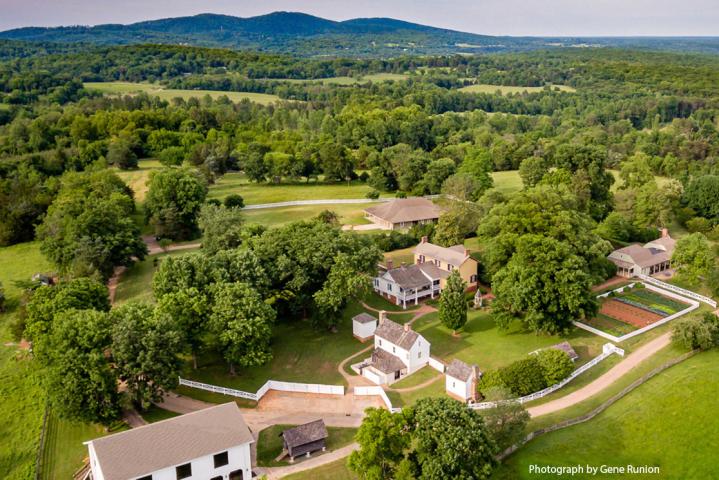
Monroe’s legacy is of particular interest to William & Mary because since 1974 the university has owned Monroe’s Albemarle County property, Highland, and operated it as a public historic site. Research generated at Highland since 2012 has overturned long-held misunderstandings and revealed the discovery of the lost and forgotten main house from 1799. At the same time, the work correctly identified the standing structure as the 1818 Guesthouse built by enslaved men Peter Malorry and George Williams, who usually lived, along with their wives Charity and Ann, respectively, at Oak Hill, Monroe’s more grand property in Loudoun County, Virginia.
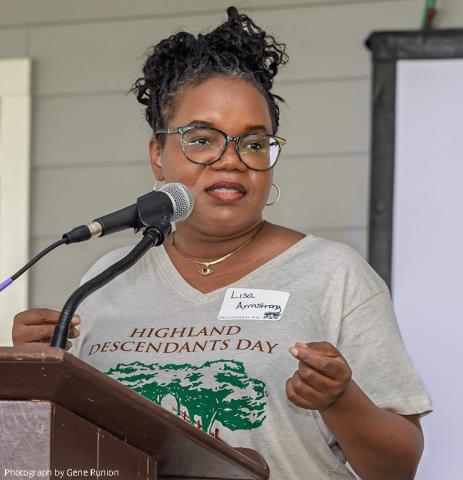
The correction of public knowledge of the physically misunderstood property has been an opportunity to approach the interpretation of Highland and Monroe himself with greater attention to the diverse nature of American history. Since 2017 Highland has collaborated with a group of individuals whose ancestors labored at Highland during slavery or after the Civil War. Having grown into a formal advisory body, Highland’s Council of Descendant Advisors has input on research and interpretation of history at Highland, including its content and delivery.
The documents included in WJMO tell Monroe’s story, and that of the people around him. These are the stories of the young United States, and cover topics as varied as political decisions to the establishment of Monroe’s home and agricultural plantation at Highland, and personal grief. It is a goal of this project that users will explore all these topics and more, appreciating the complexity of the individual experience and key considerations of the early decades of the United States.