

The William & Mary Libraries Undergraduate Library Research Awards recognize the creative and original library research completed by William & Mary undergraduate students. Awards are given to students whose papers best illustrate exemplary use of W&M Libraries' tools and resources and the development of information-gathering skills. Four awards are granted each year in two categories: Freshman/Sophomore and Junior/Senior.
Junior/Senior Category

First Place: Iqra Ahmad ’26 - $750
Iqra Ahmad ’26 has received the first-place award in the Junior/Senior category for her paper, “Pyaar, Izzat, Himmat, aur Zindagi: Love, Honor, Strength, & Life: Uncovering lost narratives on the South Asian diaspora's fight against the HIV/AIDS Pandemic.” The project uncovers the overlooked role of queer South Asian communities in responding to the HIV/AIDS crisis, highlighting how activists navigated intersecting stigmas related to race, sexuality, and immigration. Ahmad argues that these communities developed transnational and coalition-based strategies to address gaps in public health outreach, while also confronting marginalization within both South Asian and broader queer spaces. The award committee was impressed by Ahmad’s ambitious scope and nuanced analysis of intersectionality in activism. Her work stands out for its rich use of archival sources, compelling narrative, and commitment to recovering marginalized histories.
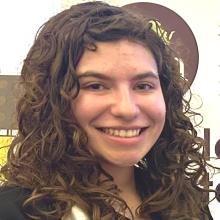
Second Place: Elissa Press ’27 - $500
Elissa Press ’27 the second-place award in the Junior/Senior category for her paper, “Birth in Bronze: Examining the Gynecological and Obstetrical Tools of Pompeii.” The paper investigates obstetrical practices in ancient Rome through archaeological evidence from Pompeii, arguing that midwifery was a highly skilled, woman-led medical practice rather than a primitive or male-dominated field. Press demonstrates how specialized tools and their domestic contexts reveal a sophisticated system of care that afforded women significant professional authority and agency. The award committee was impressed by Press’s careful analysis of material evidence and her ability to challenge longstanding assumptions about ancient medicine. Her work stands out for its integration of archaeological data with broader historical interpretation and its focus on restoring women’s roles in medical history.
Freshman/Sophomore Category:
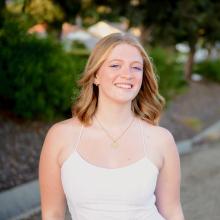
First Place: Emma Beelner ’28 - $750
Emma Beelner ’28 has received the first-place award in the Freshman/Sophomore category for their paper, “Unmasked: The Ku Klux Klan’s Rise and Fall in Anaheim, California.” The paper examines the rise and rapid decline of the Ku Klux Klan in 1920s Anaheim, California, challenging traditional narratives that center race by highlighting the role of religious conflict. Beelner argues that the Klan gained influence by exploiting Protestant-Catholic tensions within the community, but ultimately lost power through coordinated, community-wide resistance. The award committee was impressed by Beelner’s thorough research and nuanced analysis of how local dynamics shaped both the Klan’s appeal and its downfall. Her work stands out for its effective use of diverse primary sources and its emphasis on collective community action.
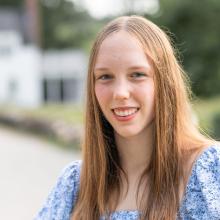
Second Place: Sophie Gustafson ’29 - $500
Sophie Gustafson ’29 has received the second-place award in the Freshman/Sophomore category for their paper, “The Effect of Telomere Length on Adenocarcinomas.” The paper explores the role of telomere length in the development and progression of adenocarcinomas, emphasizing how extended telomeres enable cancer cells to evade senescence and proliferate. Gustafson examines both the molecular mechanisms behind telomere maintenance and the clinical factors that influence telomere length, while also considering emerging treatment approaches such as targeting telomerase and gene-editing technologies. The award committee was impressed by Gustafson’s clear synthesis of complex scientific research and her ability to connect molecular biology to clinical applications. Her work stands out for its strong engagement with current studies and its thoughtful consideration of future directions in cancer research.